At Guru Shikhar, I had climbed all those steps for a view that the clouds were in no hurry to show me. Somewhere beyond the mist were the hills I wanted to film. Around me, a weekend crowd kept moving towards the temple, stopping for photographs, catching its breath, carrying on. I stood there with my camera and a small, familiar travel dilemma: do I wait for the perfect frame, or enjoy the one in front of me?
Mount Abu made that decision for me. The air was cool, the valley kept disappearing, and Rajasthan looked wonderfully different from the picture its name usually brings to mind. Over this trip, between marble temples, green hills and the bustle around Nakki Lake, I found a version of a hill-station holiday I really liked: a little exploring, a little planning, and enough time to stop looking at the clock.
The journey begins below the hills
There is something lovely about arriving at a railway station whose name already feels like the beginning of a holiday. Abu Road was that starting point for this trip. But here is the useful detail to remember: Abu Road station and Mount Abu town are different places. The hill station is roughly 30 km away, so keep time in your plan for the climb up.
In my video, I explain the onward options: a local bus, a shared taxi, or a private cab. A direct bus to Mount Abu can simplify the arrival, too; check the actual drop-off point when booking. Once the practical part is sorted, you can give the winding road and the changing landscape your attention.
For a first visit, I would look for a stay around Nakki Lake. That is where the market, food stalls and much of the evening activity come together. It is convenient when you want to finish sightseeing, freshen up and head out again without turning dinner into another transport decision. Check recent hotel reviews and the exact walking distance before you book.
Guru Shikhar, and the view I had to leave to the clouds
Guru Shikhar was my first sightseeing stop in the vlog. At 1,722 metres, it is the highest peak of the Aravalli range, with the Guru Dattatreya temple drawing visitors up the steps. The climb is around 300 steps, and the little stalls along the way give you plenty of reasons to pause. Take it at your own pace.
After darshan, I went a little higher, towards the sacred footprints and the large bell. On a clear day, the view is a big part of the reward. During my visit, fog softened everything. I could not show you the crisp panorama I had hoped for, and the weekend crowd meant this was far from a solitary mountain moment.
Still, I liked being there. I am always collecting information when I travel: how to reach a place, what it costs, whether the walk is manageable. But standing at the top, I wanted to put that mental notebook away for a minute. The mountain did not owe my camera a clear sky. It was enough to have climbed into the clouds.
A quieter pause at Achalgarh
From Guru Shikhar, the story moves to Achalgarh. There are fort remains to explore, but the temple and lake below deserve your attention too. At Achaleshwar Mahadev, local belief connects the shrine with Lord Shiva’s toe; I also point out the large Nandi in the video.
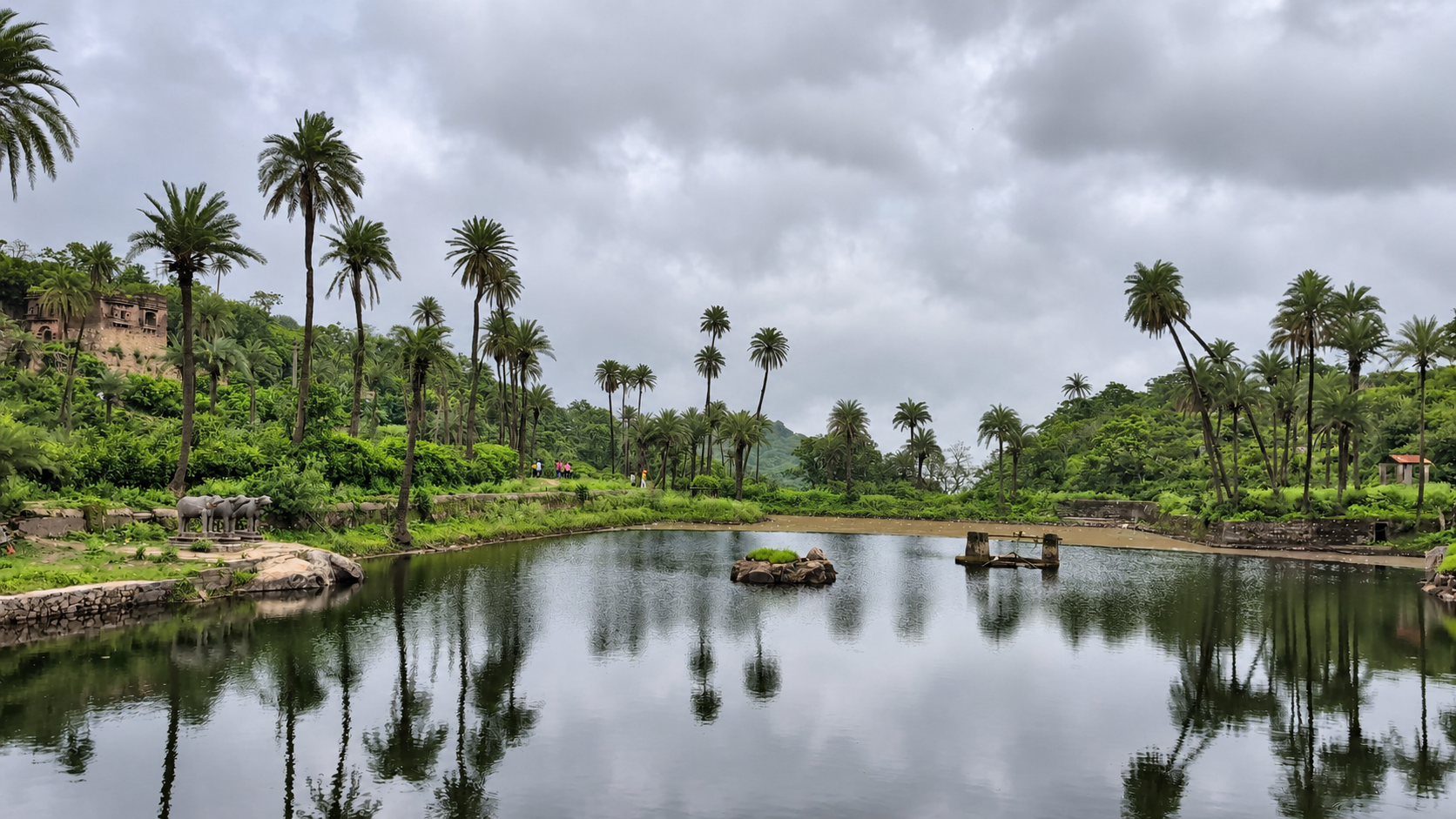
Behind the temple is Mandakini Lake. Rocky slopes, tall palms and reflections give this stop a different rhythm, and the three stone buffalo figures make it easy to recognise in the photographs. After the movement and chatter at Guru Shikhar, this was the sort of place that made me want to linger over a frame.
If you want to go higher towards the fort, ask locally about the jeep service and exactly what the fare includes. The price for one direction, a return journey and a guided visit can mean very different things.
Dilwara: the part of the trip my camera could not tell
As a travel creator, I am used to thinking about how I will show a place to you. Dilwara asked me to experience it without that habit. During my visit, photography and filming were not allowed inside, and belongings had to be left outside in a locker.
The white-marble workmanship was extraordinary. There was so much detail to look at that I kept imagining how easily I could have missed it while trying to record everything. Here, I had to look properly. Some places give you a memory that is more detailed than the photograph you would have taken.
Follow the temple’s current visiting arrangements and instructions when you arrive. This is a place of worship, so give it time and respect. If you enjoy quieter temple stops, Somnath Mahadev also features in my vlog; remember to look up at the ceiling paintings.
Taking the slow way to Honeymoon Point
The approach to Honeymoon Point became part of the outing itself. In the video, I describe a walk of about 10–15 minutes, with greenery along the route and glimpses of Nakki Lake. There were other ways to cover the distance, but walking gave me a reason to keep stopping and looking around.
The fog had followed me here too. The faraway view was hazy, but the place still felt relaxing. I could imagine staying much longer than the few minutes people often allow a viewpoint. A bench, a little breeze, another look at the hills: sometimes that is a perfectly good plan for an afternoon.
This is also where I would resist squeezing every stop into one day. Arbuda Devi, also known as Adhar Devi, involves another substantial stair climb to a cave temple. If it is on your list, allow time and energy for it instead of treating it as a quick addition between viewpoints.
By evening, everything leads back to Nakki Lake
After the hills and temples, Nakki Lake changes the mood again. There are boats on the water, people gathering by the shore, and a market that stays lively into the evening. Food stalls, shopping and games make the area feel like the meeting point for everybody’s day out.
Nearby, you can visit Shri Raghunathji Temple and make the short climb towards Toad Rock, named for its distinctive shape. From that side, you get another perspective on the lake. If you still want a sunset stop, choose one viewpoint and leave enough time to enjoy it; there is no need to race between them.
For me, the appeal of ending around Nakki Lake was simple. After a day of reaching places, I could just be somewhere. Watch the boats. Wander through the market. Decide what to eat when something looked good. Let the evening get a little longer.
That is the Mount Abu I would come back for: the combination of a crowded temple staircase, marble I could not photograph, palms reflected in quiet water, and a lakeside evening with no urgent next stop.
How I would plan two days in Mount Abu
This is my suggested route for your trip, rather than the order of every scene in the story. Start early, check temple visiting hours, and adjust for weather and how much walking your group wants to do.
Day 1 — temples and the lake: Visit Dilwara, with Somnath Mahadev and Arbuda Devi as optional additions according to opening times and energy. Allow time for the walk to Honeymoon Point, then explore the Nakki Lake area, Shri Raghunathji Temple and Toad Rock as time allows. Keep the evening for the lake and market. If that sounds full, drop an optional stop and enjoy a slower afternoon.
Day 2 — higher hills and Achalgarh: Leave early for Guru Shikhar to get ahead of some of the crowd. Continue to Achalgarh and the temple-and-lake area, then allow a comfortable buffer for the journey back to Abu Road or your next destination.
Getting around: My video covers rented bikes, shared sightseeing jeeps, a sightseeing bus and private cabs. Bikes give flexibility, but the roads are narrow and winding. Shared transport has fixed meeting points and less flexibility; the sightseeing bus does not cover every viewpoint. Compare the route and inclusions before choosing.
A useful budget starting point
These are approximate figures quoted in my 2026 video, not live prices. Confirm current rates before booking. Season, weekends, room type and your choice of transport can change the total.
| Expense | Estimate from the video |
|---|---|
| Basic stay for two people | ₹1,500–₹2,000 per room, per night |
| Bike rental | Roughly ₹400–₹600 per bike, per day; confirm fuel and deposit |
| Shared sightseeing jeep | About ₹300 per person; shared seating |
| Sightseeing bus | About ₹175 per person; limited route |
| Food | Allow about ₹700–₹800 per person, per day |
| Abu Road to Mount Abu | About ₹45 by bus, around ₹100 in a shared taxi, or ₹1,300–₹1,500 for a private cab |
Your train, flight or long-distance bus fare is extra. Keep a separate allowance for parking, lockers, attraction fees and optional activities such as boating. Ask at the lake for the current boat type, duration and tariff; I would not plan around an old boating price.
My preference in the video is for the post-monsoon and winter months, when the weather can be pleasant for exploring. The mist in my own trip is a good reminder that clear views are never guaranteed. Pack shoes with grip, keep a layer handy, and leave a little space in the itinerary for the weather.
Watch the journey with me
For the route, on-location views and more planning details, watch my complete Mount Abu travel video. You can also browse the Rajasthan Tourism destination page for official background on the main sights.
Have you been to Mount Abu? Tell me which stayed with you longer: the hills, the temples or the evenings around the lake. Keep traveling with Tejasvi!
Story note: Adapted from my Mount Abu vlog, with creatively reconstructed reflections. Practical details come from the video; the two-day route is a planning suggestion. The accompanying trip photograph has been enhanced with AI for colour and lighting.
Reply